COASTER No. 2105
Overview
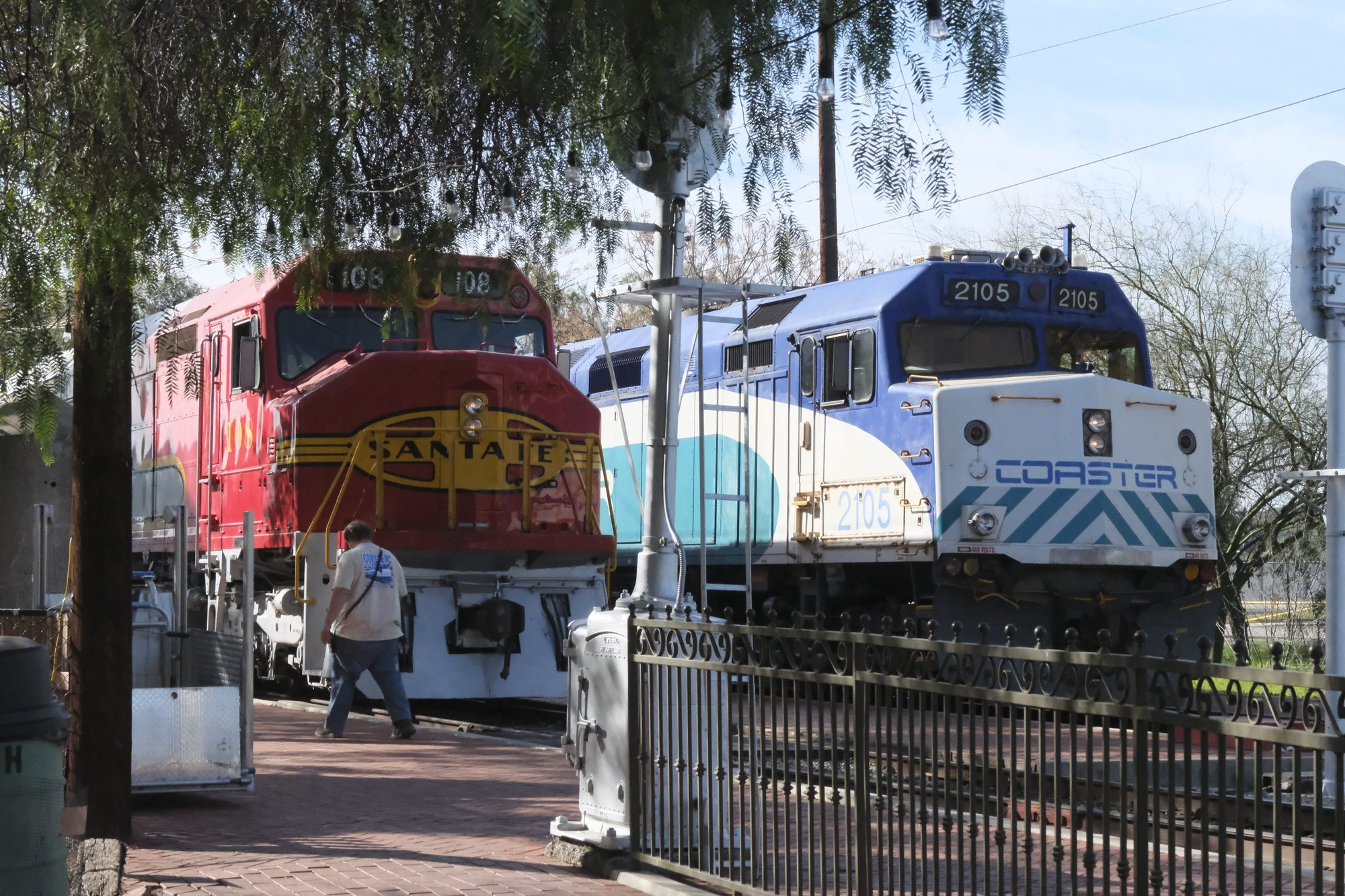
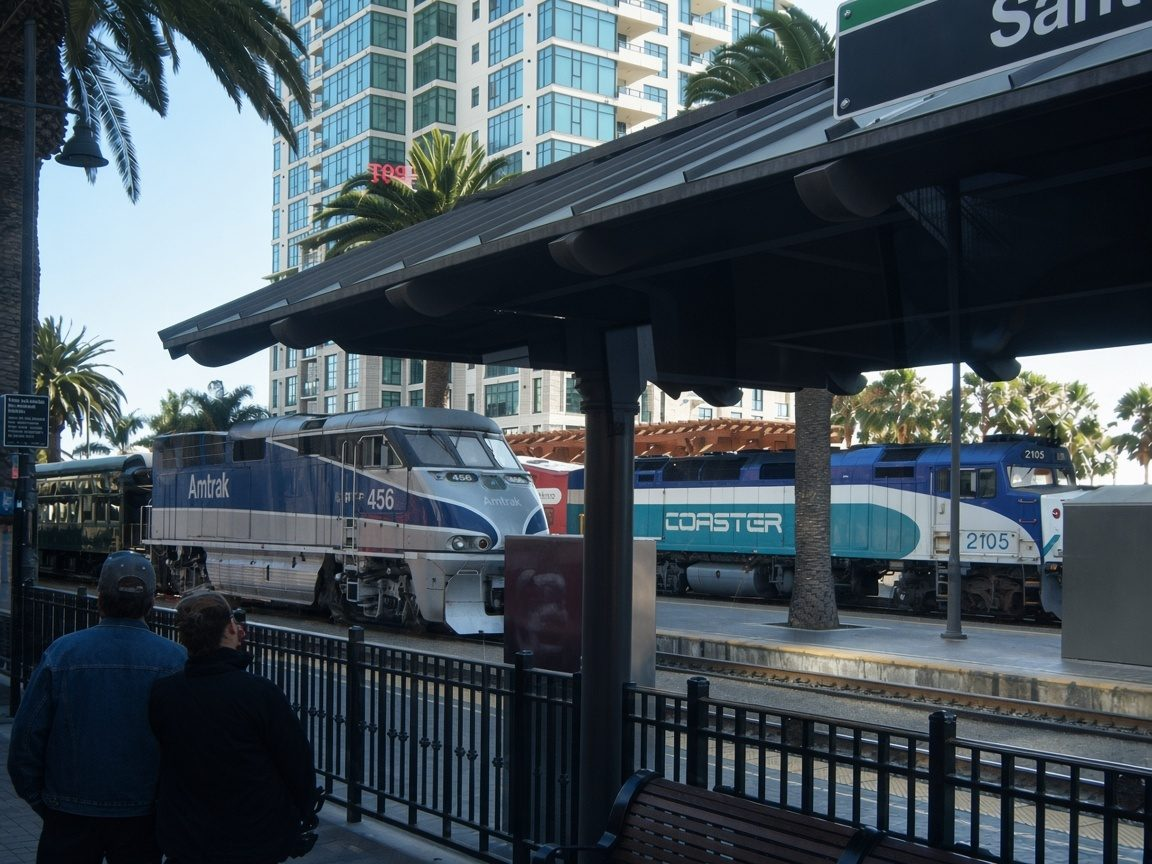
COASTER No. 2105 is a preserved F40PHM-2C diesel-electric locomotive built by Morrison-Knudsen in 1994 for North County Transit District’s COASTER commuter rail service in San Diego County. As one of the five locomotives that launched COASTER service in 1995, No. 2105 became part of the railroad’s identity and remained in service on the Surf Line for more than a quarter century. Today, it is preserved at the Southern California Railway Museum in Perris, California, where it represents the first generation of modern commuter rail service in San Diego County.
Rather than representing a famous streamliner or a legendary freight locomotive, 2105 tells the story of everyday transportation. For thousands of Southern Californians, locomotives like 2105 were the face of rail commuting, carrying passengers between Oceanside and San Diego for work, school, military service, and recreational travel.
Quick Facts
| Railroad | COASTER (North County Transit District) |
| Number | 2105 |
| Model | F40PHM-2C |
| Builder | Morrison-Knudsen |
| Built | 1994 |
| Entered Service | 1995 |
| Retired | 2021 |
| Original Owner | North County Transit District |
| Current Owner | Southern California Railway Museum |
| Status | Preserved; operable as a non-powered control unit with a compatible locomotive |
| Location | Perris, California |
| Preserved Sister Locomotive | COASTER No. 2103 (Pacific Southwest Railway Museum, Campo) |
The Locomotive That Helped Launch COASTER
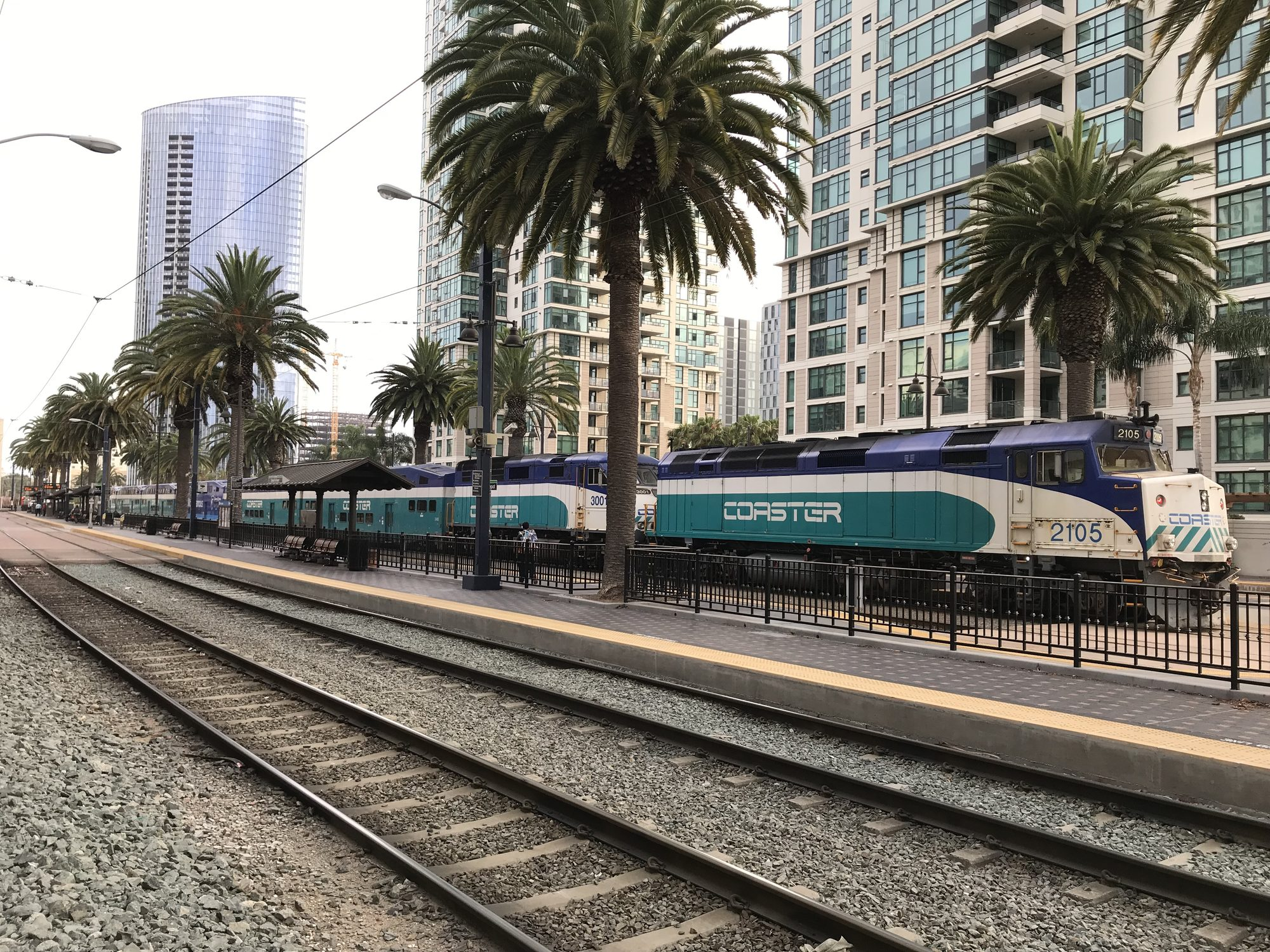
When COASTER began service in February 1995, its entire locomotive fleet consisted of five F40PHM-2C locomotives numbered 2101 through 2105. These locomotives hauled commuter trains between Oceanside and downtown San Diego over the historic Surf Line and quickly became synonymous with the new railroad.
For a generation of North County commuters, the distinctive blue, white, and sea-green locomotives became a familiar sight. Long before Siemens Chargers arrived, the original F40PHM-2C fleet defined the public image of COASTER and helped establish passenger rail as a practical transportation option in the region.
The locomotives represented a different era of Southern California passenger rail. While Amtrak’s Pacific Surfliner equipment became known for its blue-and-silver appearance, COASTER’s blue, white, and sea-green color scheme reflected the railroad’s coastal identity and gave San Diego County its own visual brand.
More Than Twenty-Five Years of Service
Throughout its career, 2105 served alongside the rest of the original COASTER fleet as the railroad expanded and matured. During those years, the locomotive saw growing ridership, station improvements, additional train service, and closer integration with the broader Southern California passenger rail network.
The locomotive operated through major changes in regional transportation while remaining part of COASTER’s daily operations. As newer locomotives entered service elsewhere in California, the original COASTER fleet continued serving the corridor it had helped establish.
For many railfans and commuters, 2105 became a familiar and recognizable locomotive in San Diego County.
Replacement by the Charger Era
The beginning of the end for the original F40PHM-2C fleet came with the introduction of Siemens Charger locomotives. North County Transit District selected the Tier 4-compliant locomotives as part of a fleet modernization program intended to improve reliability, emissions performance, and operational efficiency.
As the Chargers entered service, the original fleet was retired. By February 2021, the locomotives that had launched COASTER more than twenty-five years earlier had completed their final runs.
Preservation Requirements and Survival
The retirement of the original COASTER fleet was complicated by the requirements attached to the California Carl Moyer Program grant used to help fund the replacement locomotives. Because the program was intended to reduce locomotive emissions, the original requirements threatened the survival of the retired F40PHM-2C fleet.
Those requirements were ultimately altered so that locomotives selected for preservation could be retained with their prime movers and head-end power (HEP) generators disabled rather than being completely destroyed. The arrangement prevented the preserved locomotives from returning to conventional self-powered revenue service while allowing historically significant examples of the original COASTER fleet to survive.
This compromise preserved 2105 as a substantially intact locomotive. It retained its recognizable exterior, cab, operating controls, structure, and multiple-unit connections instead of being reduced to a stripped shell or a purely cosmetic display.
From Commuter Locomotive to Control Unit
Although 2105 can no longer operate under its own power, it remains more than a static exhibit. Its operating cab and multiple-unit (MU) capability allow it to be coupled to a compatible powered locomotive and used as a control unit.
In this configuration, an engineer can control the train from the cab of 2105 while another locomotive supplies the traction power. This allows 2105 to operate as a non-powered control unit (NPCU), preserving a practical role for the locomotive even though its prime mover and HEP generator have been disabled.
The arrangement also creates opportunities for museum demonstrations and interpretation. Visitors can experience a largely intact COASTER cab and see the locomotive move as part of a train, while the power needed for movement comes from another locomotive in the consist.
The Road to Perris
Following retirement, 2105 spent several years in storage while preservation plans were finalized. During this period, the locomotive’s future remained uncertain. Many retired passenger locomotives are ultimately scrapped, particularly when regulatory or grant requirements complicate preservation efforts.
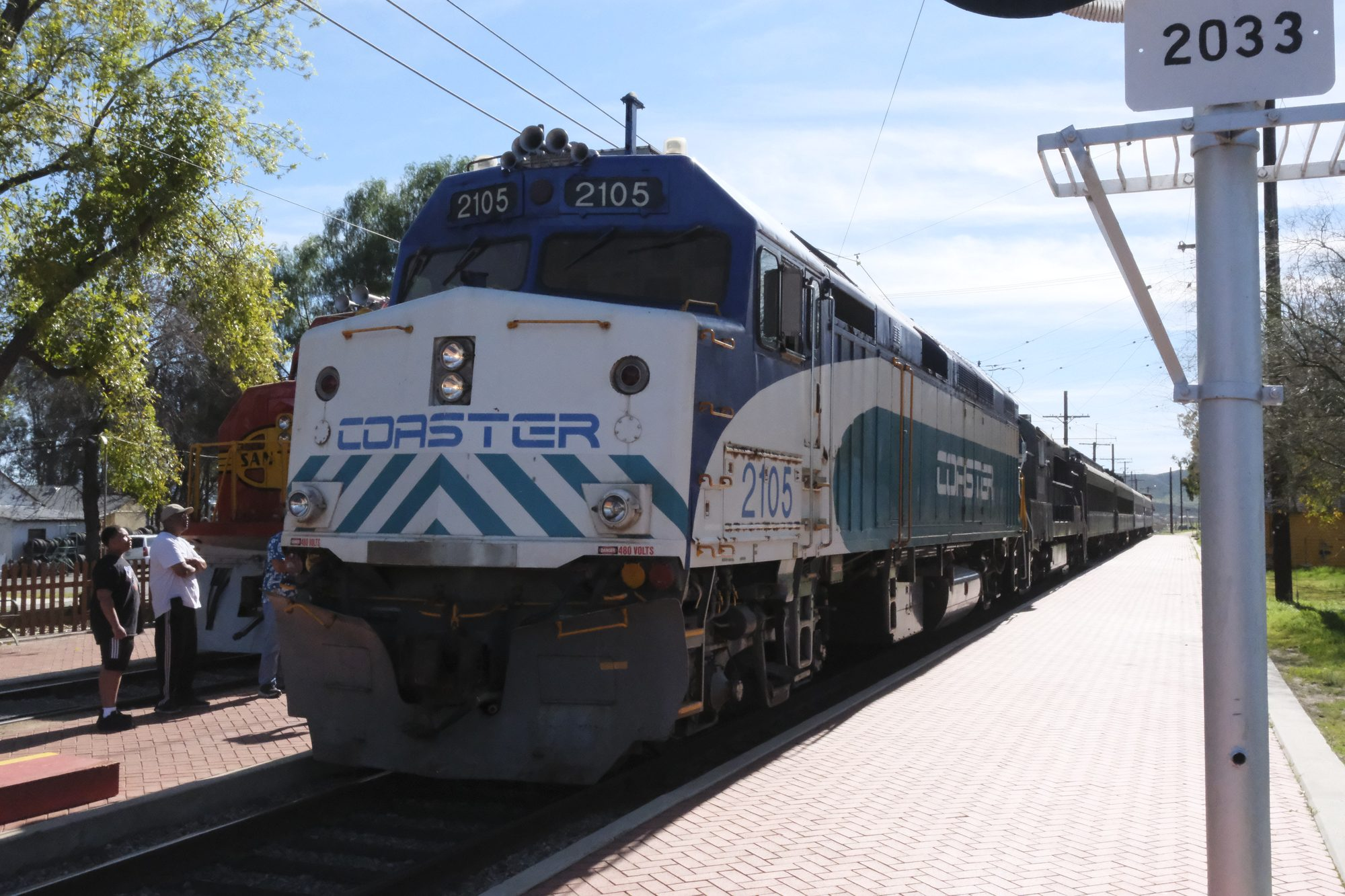
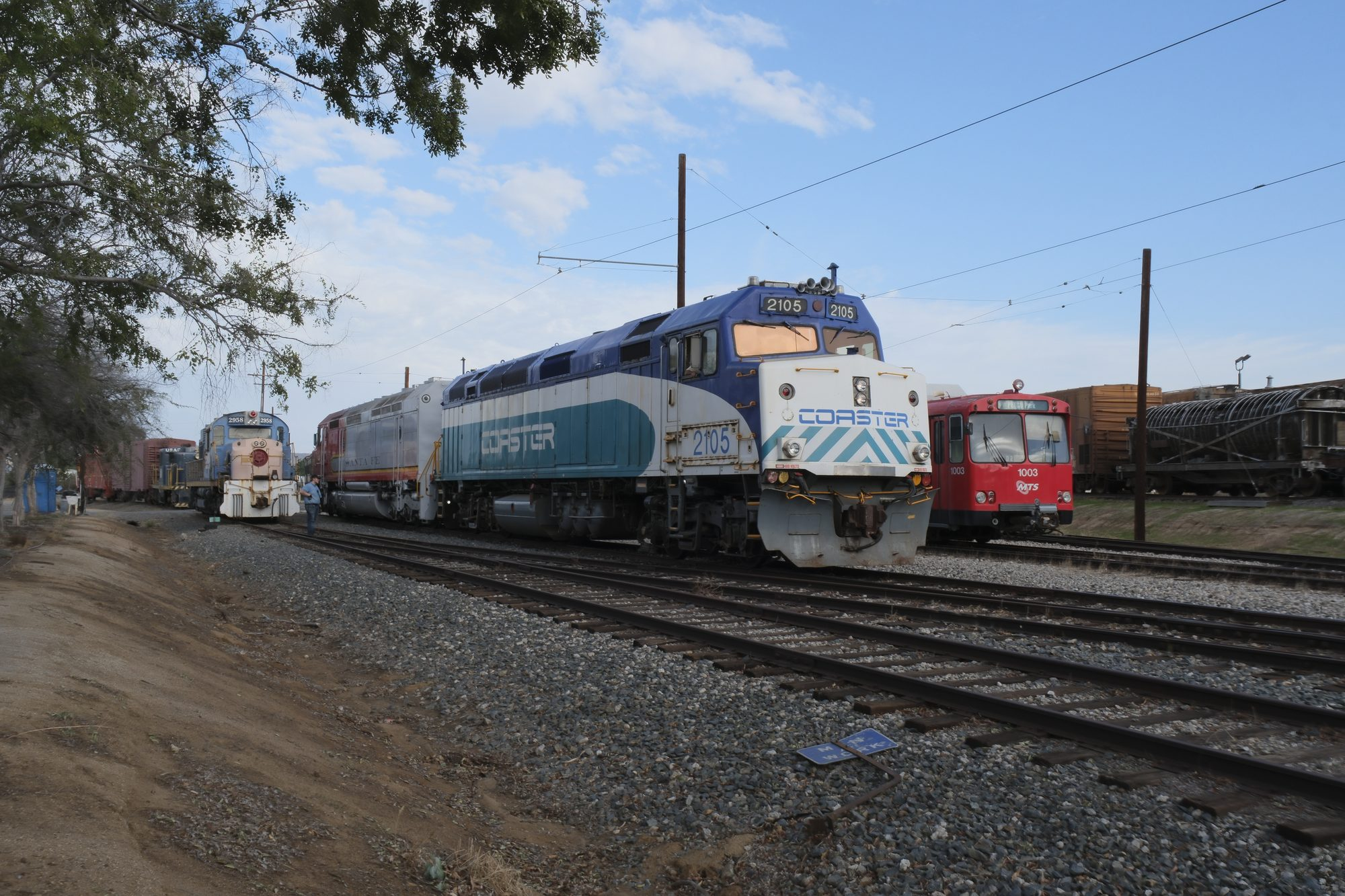
A preservation solution emerged. While sister locomotive 2103 was retained by the Pacific Southwest Railway Museum in Campo, 2105 was transferred to the Southern California Railway Museum in Perris. The locomotive arrived at the museum in May 2025, keeping a representative of the original COASTER fleet accessible to the public in Southern California.
Why 2105 Matters
Many preserved locomotives are celebrated because they hauled famous trains or introduced groundbreaking technology. COASTER 2105 is important for a different reason.
It represents the first generation of modern commuter rail service in San Diego County.
For more than twenty-five years, locomotives like 2105 played a quiet but important role in everyday life, transporting workers, students, military personnel, tourists, and families throughout the region. It helped demonstrate that passenger rail could remain relevant in a strongly automobile-oriented region.
The locomotive also highlights a growing challenge for railroad preservation. Equipment from the 1980s, 1990s, and early 2000s is reaching retirement age. Preserving locomotives like 2105 ensures that the story of modern passenger rail is not lost simply because it is newer than traditional museum equipment.
Preservation Status
Today, COASTER 2105 is preserved at the Southern California Railway Museum in Perris, California. The locomotive represents the railroad’s founding fleet, the growth of commuter rail in San Diego County, and a successful effort to preserve a piece of Southern California transportation history. The museum has featured the locomotive during special events and public programs since its arrival.
Related Railroads
Related Museums
Related Locations
Related Topics
- COASTER No. 2103
- LOSSAN Corridor
- North County Transit District
- Oceanside Transit Center
- Railroading Terms & Definitions
- Siemens Charger
- Surf Line
Gallery
Western Rail Archive Notes
Sources describe the F40PHM-2C locomotives as built by Morrison-Knudsen using a mix of EMD and Morrison-Knudsen components, including remanufactured components from older locomotives.
COASTER 2105 is significant not because it is the oldest locomotive in preservation, but because it represents an era that many Southern Californians still remember. As commuter rail equipment from the late twentieth century begins reaching museum collections, locomotives such as 2105 help bridge the gap between historic railroad preservation and the transportation systems people continue to use today.
Archive Status
| Page Status | Category | Type | Gallery |
|---|---|---|---|
| Foundational Article | Equipment | Locomotive | In Development |