D&RGW C-19 Class
Overview
The Denver & Rio Grande Western C-19 class was a group of three-foot-gauge 2-8-0 Consolidation steam locomotives built by the Baldwin Locomotive Works in 1881 for the Denver & Rio Grande.
Originally designated Class 70 and Class 74, the locomotives were among the larger narrow-gauge engines acquired during the railroad’s early expansion. Under the Denver & Rio Grande Western’s later classification system, C identified a Consolidation and 19 represented approximately 19,000 pounds of tractive effort.
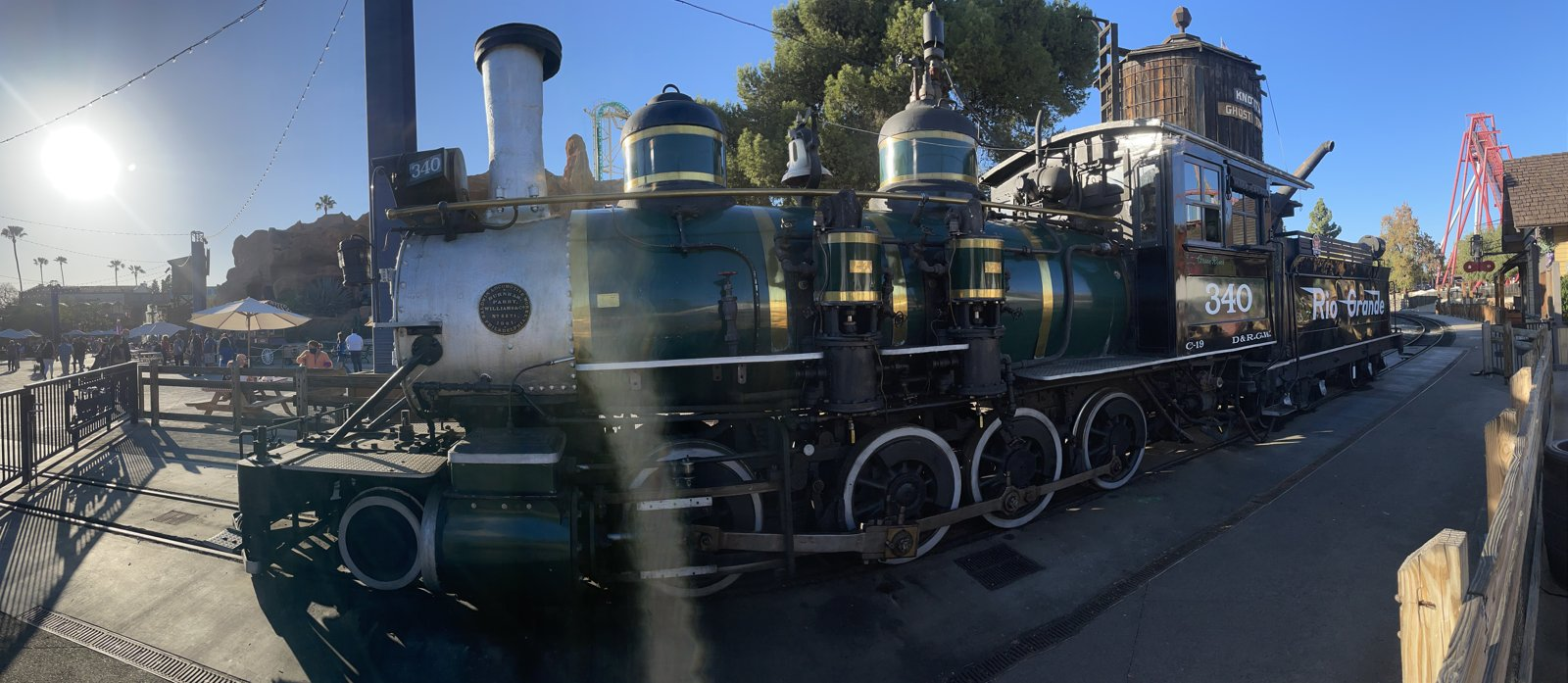
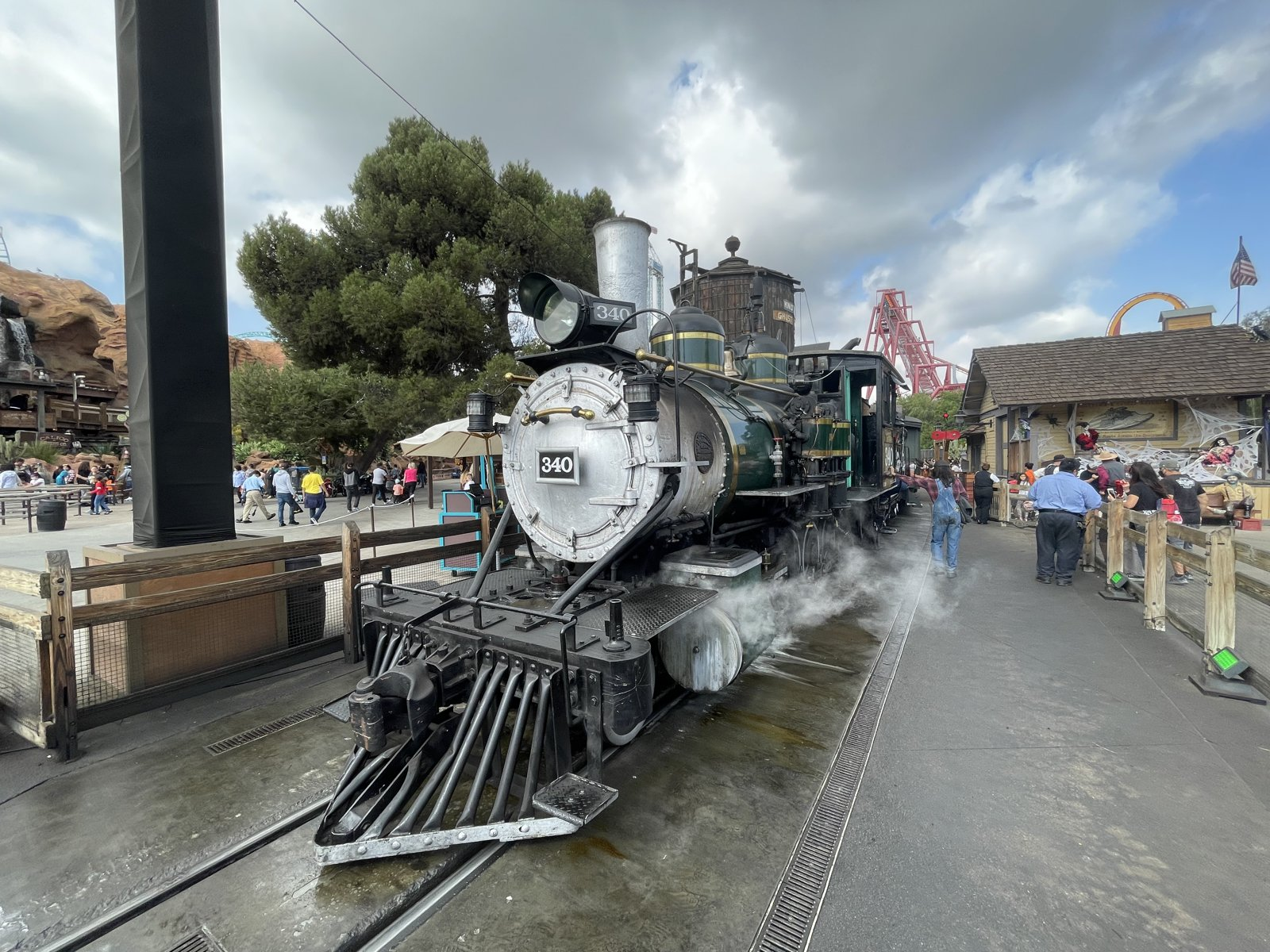
Three formal C-19 locomotives survive: D&RGW No. 340 and RGS No. 41 at Knott’s Berry Farm, and D&RGW No. 346 at the Colorado Railroad Museum.
Quick Facts
| Railroad | Denver & Rio Grande / Denver & Rio Grande Western |
| Original Classification | Class 70 and Class 74 |
| Later Classification | C-19 |
| Wheel Arrangement | 2-8-0 Consolidation |
| Track Gauge | 3 feet |
| Builder | Baldwin Locomotive Works |
| Build Year | 1881 |
| Original Number Series | D&RG Nos. 400–411 |
| Later Number Series | D&RGW Nos. 340–349 (survivors only) |
| Approximate Tractive Effort | 19,000 pounds |
| Formal Survivors | Nos. 340, 346, and 41 |
Built for a Growing Narrow-Gauge Railroad
The Denver & Rio Grande expanded rapidly through mining districts, mountain towns, agricultural regions, and developing communities. As traffic increased, Baldwin’s 2-8-0 design supplied greater adhesion and pulling power while remaining compatible with sharp curves, light track, and restricted clearances.
From Class 70 to C-19
The locomotives entered service within the Denver & Rio Grande’s Class 70 system. Several were temporarily converted to standard gauge and identified as Class 74 before returning to three-foot gauge.
In 1924, the D&RGW adopted its wheel-arrangement and tractive-effort classification system. The surviving locomotives from the group were renumbered into the 340 series. Only locomotives that survived on the roster to 1924 received 340-series numbers.
Standard-Gauge Conversions
Five members of the 1881 group were temporarily converted from narrow gauge to standard gauge during the late 1880s and returned to narrow gauge by 1900. The changes complicate individual histories because locomotives did not always regain their original numbers.
A Long-Lived Design
Larger locomotives eventually displaced the C-19s from the heaviest assignments, but their manageable size kept them useful in branch-line, local freight, switching, mixed-train, work, and secondary service.
Rio Grande Southern Service
Two members of the broader 1881 group were sold to the Rio Grande Southern in 1916. D&RG No. 409 became RGS No. 41, while D&RG No. 411 became RGS No. 40. No. 41’s survival preserves a direct connection between the class and the Rio Grande Southern.
Colorado & Southern Service
During 1936 and 1937, D&RGW Nos. 343, 345, and 346 were leased to the Colorado & Southern Railway. No. 346 wrecked below Kenosha Pass in 1936, was rebuilt, and remained in lease service until the end of C&S narrow-gauge operations in 1937.
The Three Surviving C-19s
D&RGW No. 340 was built as No. 400, Green River, and has operated at Knott’s Berry Farm since 1952.
RGS No. 41 was built as D&RG No. 409, Red Cliff, sold to the RGS in 1916, and purchased by Walter Knott in 1951.
D&RGW No. 346 was built as No. 406, Cumbres, later worked for the Colorado & Southern and Montezuma Lumber Company, and became a foundational artifact of the Colorado Railroad Museum.
A Related Fourth Survivor: RGS No. 42
RGS No. 42 is sometimes grouped with the surviving C-19s because it descended from the broader D&RG Class 70 family and appears in combined rosters.
No. 42 is cosmetically preserved inside the roundhouse museum in Durango. However, it was built in 1887 as D&RG No. 420 and is formally classified as a C-17, not a C-19.
For WRA, the clearest treatment is three surviving C-19 locomotives, Nos. 340, 346, and 41, plus one closely related Class 70 survivor, RGS No. 42.
Two Preservation Models
Walter Knott preserved Nos. 340 and 41 by placing them into regular public operation at Knott’s Berry Farm. Robert Richardson preserved No. 346 through the museum collection that became the Colorado Railroad Museum. Together, the two approaches ensured that the class survived in both California and Colorado.
Why the C-19 Class Matters
The C-19s document the expansion of the Denver & Rio Grande, the development of narrow-gauge freight power, temporary standard-gauge experiments, Rio Grande Southern and Colorado & Southern service, industrial reuse, and early preservation.
Preservation Status
Three locomotives formally classified as C-19s survive: D&RGW No. 340, RGS No. 41, and D&RGW No. 346. Their survival from an 1881 locomotive group reflects the work of Walter Knott, Robert Richardson, the Colorado Railroad Museum, Knott’s Berry Farm, and generations of railroad craftspeople and supporters.
Related Railroads
- Denver & Rio Grande Railroad
- Denver & Rio Grande Western Railroad
- Ghost Town & Calico Railroad
- Rio Grande Southern Railroad
Related Museums
- Colorado Railroad Museum
Related Topics
- D&RGW No. 340
- RGS No. 41
- D&RGW No. 346
- RGS No. 42
- Baldwin Locomotive Works
- Narrow-Gauge Railroad
Gallery
Western Rail Archive Notes
The C-19 story is not simply about a locomotive class. Two survivors went to Southern California, where usefulness kept them operating before millions of visitors. Another remained in Colorado and helped anchor a museum devoted to preserving the state’s railroad heritage.
Archive Status
| Page Status | Category | Type | Gallery |
|---|---|---|---|
| Foundational Article | Equipment Class | Locomotive | In Development |