U.S. Car No. 1 “Ferdinand Magellan”
Overview
U.S. Car No. 1, better known as the Ferdinand Magellan, is a historically significant passenger railroad car preserved in the United States. Originally built by the Pullman Company as a luxury private car in 1928–29, it was rebuilt during World War II into an armored presidential railcar for Franklin D. Roosevelt.
From 1943 through the 1950s, it served as the principal presidential railcar of the United States and carried Presidents Franklin D. Roosevelt, Harry S. Truman, and Dwight D. Eisenhower. Ronald Reagan later used the preserved car during a 1984 campaign appearance.
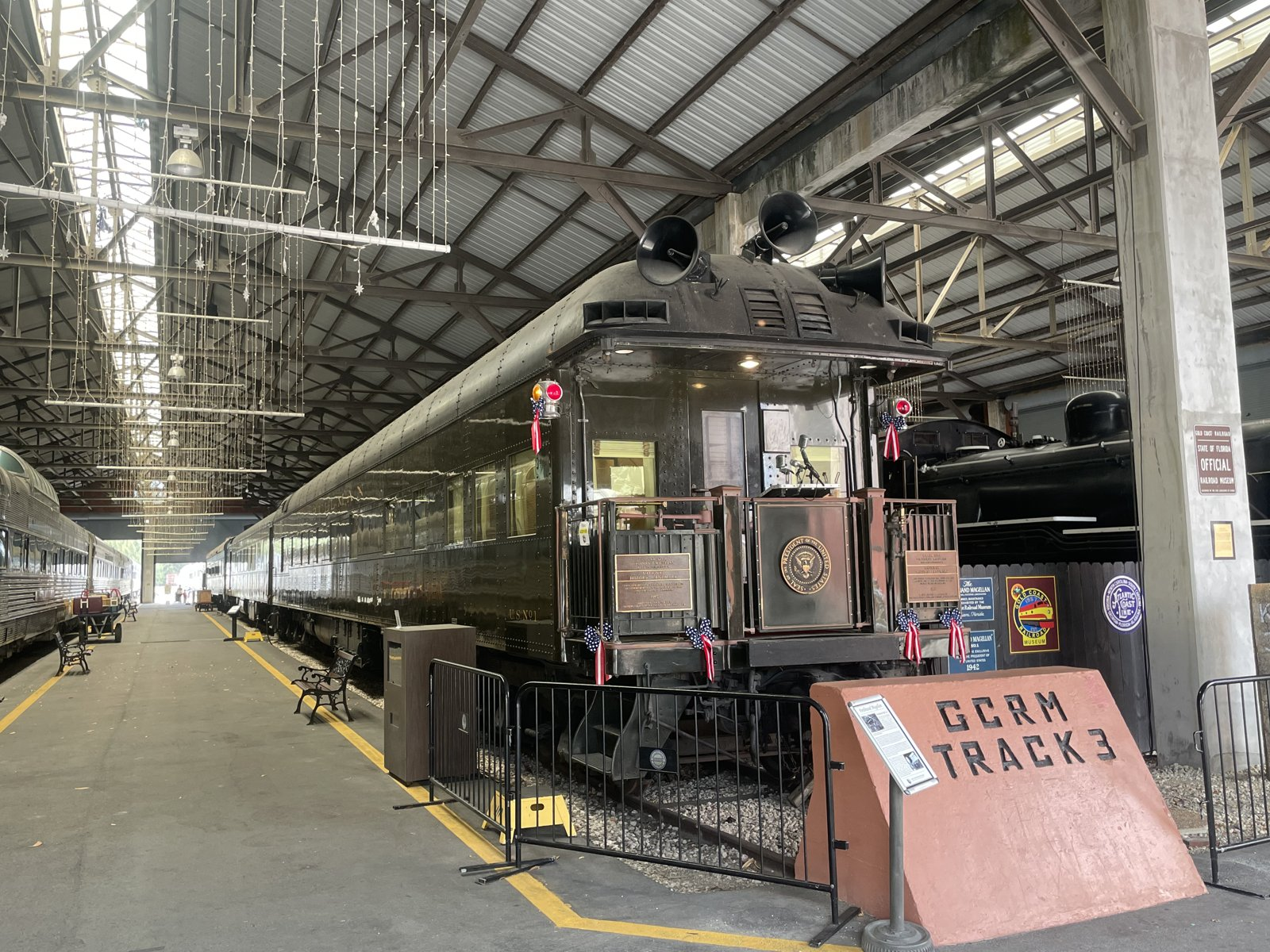
Today, the Ferdinand Magellan is preserved at the Gold Coast Railroad Museum in Miami, Florida. Its significance extends far beyond railroading into presidential transportation, wartime security, political campaigning, and American history.
Quick Facts
| Name | Ferdinand Magellan |
| Government Designation | U.S. Car No. 1 |
| Builder | Pullman Company |
| Built | 1928–29 |
| Original Purpose | Luxury private car |
| Presidential Rebuilding | 1942 |
| Entered Presidential Service | 1943 |
| Presidents Served | Franklin D. Roosevelt, Harry S. Truman, Dwight D. Eisenhower |
| Later Presidential Use | Ronald Reagan campaign trip, 1984 |
| Approximate Rebuilt Weight | 285,000 pounds |
| Current Location | Gold Coast Railroad Museum, Miami, Florida |
| Status | Preserved |
| Landmark Status | National Historic Landmark |
Before Air Force One
Today, Americans associate presidential travel with Air Force One. Before the jet age, railroads provided one of the safest and most practical means of long-distance presidential transportation.
Presidents had traveled in special railroad equipment since the nineteenth century, but wartime security officials concluded that Roosevelt required a dedicated and protected means of transportation. The result was U.S. Car No. 1.
From Luxury Car to Presidential Car
The Ferdinand Magellan began life as one of six Pullman luxury cars named after famous explorers. The group included cars named Ferdinand Magellan, Roald Amundsen, Marco Polo, Henry Stanley, David Livingstone, and Robert Peary.
After the United States entered World War II, Roosevelt’s security needs changed dramatically. The Pullman Company selected the Ferdinand Magellan for conversion into a presidential car and undertook an extensive rebuilding program.
Built Like a Rolling Fortress
The rebuilt Ferdinand Magellan was unlike an ordinary passenger car. Armor plating protected the sides, roof, ends, and floor. The windows were replaced with thick bullet-resistant laminated glass, and the structure received extensive reinforcement and security upgrades.
The rebuilding dramatically increased the car’s weight. The completed car weighed approximately 285,000 pounds and is widely described as the heaviest passenger railcar built in the United States.
The result was effectively a rolling White House designed to provide wartime protection while maintaining the accommodations needed for presidential travel.
Interior Accommodations and Security Features
Although the Ferdinand Magellan is often remembered for its armor and presidential connections, its interior was equally important. The car was designed to function as both a secure transportation vehicle and a mobile residence for the President of the United States. After its wartime rebuilding, the interior resembled a compact executive mansion rather than a conventional passenger railcar.
The presidential conversion removed one of the car’s five staterooms in order to create larger dining, observation, and living spaces. Two bedrooms became a dedicated suite for President Franklin D. Roosevelt and First Lady Eleanor Roosevelt, connected by a private bathroom that included a full-sized bathtub.
The dining room also served as a conference room where presidential staff and advisors could meet in transit. A large solid-mahogany table could seat eight people, allowing official business to continue while the train was moving.
The car also included an enlarged observation lounge, pantry and galley facilities, steward accommodations, storage areas, mechanical-service spaces, and ice bunkers supporting food service and cooling.
Security provisions were integrated throughout the car. Approximately five-eighths-inch armor plate protected the body, while sealed three-inch-thick bullet-resistant windows replaced ordinary glazing. Because the armored windows could not be opened, a special cooling system circulated air across pipes chilled by melting ice.
These features transformed the Ferdinand Magellan into a rolling combination of presidential residence, conference center, command post, and armored security vehicle. Long before Air Force One assumed similar responsibilities, U.S. Car No. 1 served as a true White House on Wheels.
Designed for Roosevelt
The Ferdinand Magellan was rebuilt specifically around the needs of Franklin D. Roosevelt, who used a wheelchair because of paralysis resulting from illness.
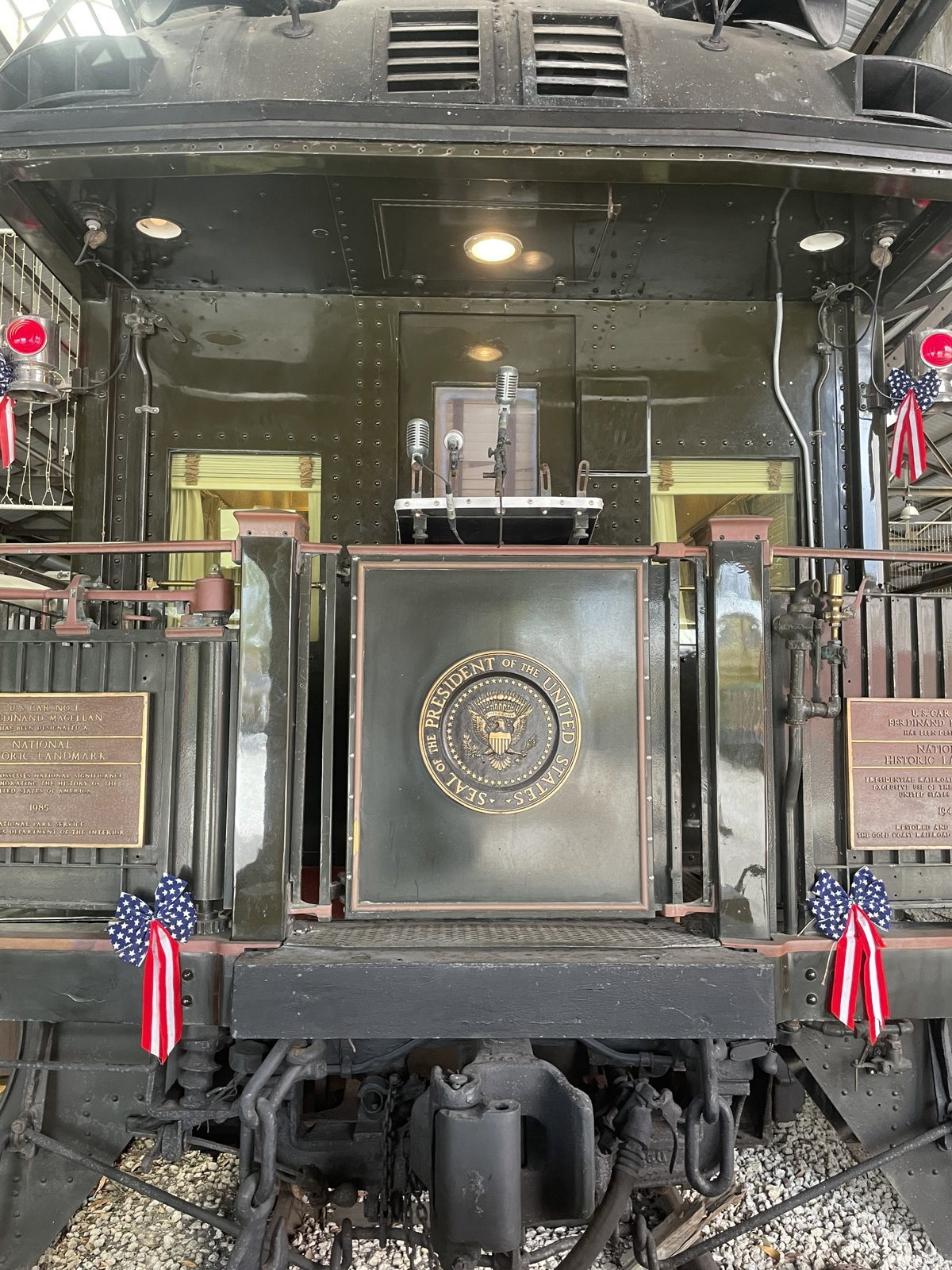
The altered layout provided expanded presidential accommodations, a connected suite for the President and First Lady, a larger dining and conference area, and an enlarged observation platform for public appearances.
The car functioned as transportation, residence, workspace, and political stage, allowing Roosevelt to govern while traveling.
Roosevelt’s Presidential Railroad Car
Roosevelt first used the Ferdinand Magellan in 1943. One of its early notable assignments involved transportation connected with the Casablanca Conference.
Over the following years, the car became the consistent centerpiece of presidential rail travel even though the locomotives and supporting railroad equipment changed from route to route.
Roosevelt’s final trip aboard the car occurred shortly before his death in 1945.
Truman’s Whistle-Stop Campaign
Although built for Roosevelt, the Ferdinand Magellan became most famous under Harry S. Truman.
During the 1948 presidential campaign, Truman traveled thousands of miles and delivered hundreds of speeches from the rear observation platform. The platform transformed the car from transportation into a mobile political stage.
The car is permanently associated with the famous photograph of Truman displaying the newspaper carrying the incorrect headline Dewey Defeats Truman.
Eisenhower and the End of the Presidential Train Era
Dwight D. Eisenhower continued using the Ferdinand Magellan, although less frequently than Roosevelt or Truman.
As aircraft became faster, safer, and more practical for presidential movement, long-distance presidential rail travel declined. The role once filled by U.S. Car No. 1 gradually passed to presidential aircraft.
The White House on Wheels
The Ferdinand Magellan was more than a railroad car. It was a mobile executive facility.
Presidential trains included staff accommodations, communications support, security personnel, press facilities, and other cars needed to move the presidency across the country.
Decades before Air Force One became an internationally recognized symbol, the Ferdinand Magellan fulfilled many of the same transportation, communications, security, and public-appearance roles.
Saved for Preservation
By the late 1950s, the Ferdinand Magellan had become surplus government property. The Gold Coast Railroad Museum acquired the car in 1959 after the Smithsonian Institution declined it.
That decision preserved one of the most significant artifacts of presidential transportation history.
A Presidential Car Returns to Service
In 1984, the preserved car temporarily returned to presidential campaign service when Ronald Reagan used it during a whistle-stop-style trip in Ohio.
The event created a direct connection between the Roosevelt, Truman, Eisenhower, and Reagan eras and demonstrated that the car retained extraordinary public symbolism decades after retirement.
National Historic Landmark
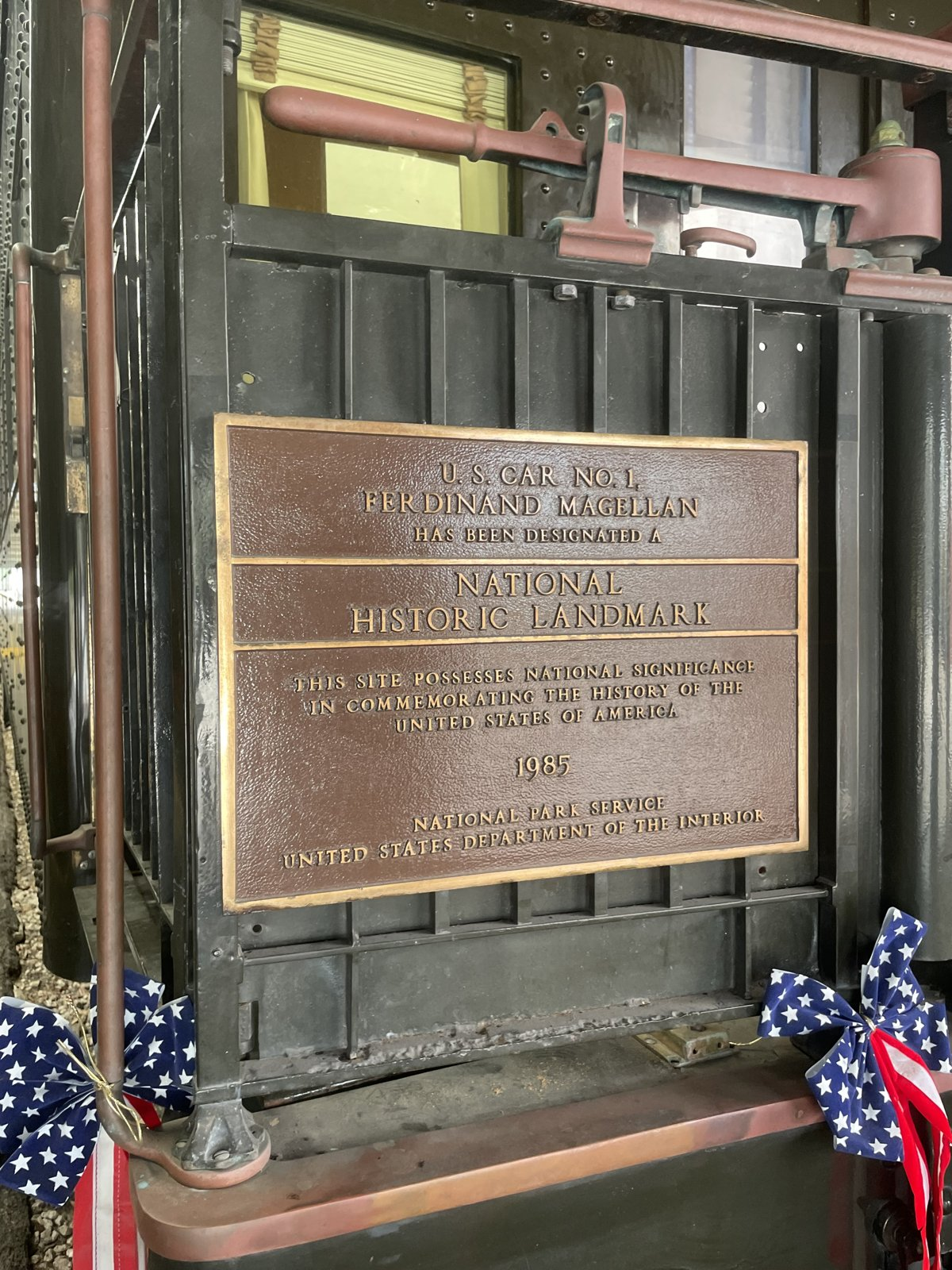
The Ferdinand Magellan was designated a National Historic Landmark in 1985.
The designation recognized its importance not only as railroad equipment, but also as an artifact of American political history, presidential transportation, World War II, and campaign communication.
Why the Ferdinand Magellan Matters
Most preserved railroad equipment is significant because of the railroad it served. The Ferdinand Magellan is significant because of the nation it served.
It represents Pullman luxury travel, World War II presidential security, Franklin Roosevelt’s presidency, Harry Truman’s whistle-stop campaign, the transition from rail to air travel, and the evolution of presidential transportation.
Its historical significance is unusually broad.
Preservation Status
The Ferdinand Magellan remains preserved at the Gold Coast Railroad Museum in Miami, Florida. It continues to tell the story of how American presidents traveled, governed, campaigned, and communicated before the age of Air Force One.
Related Museums
- Gold Coast Railroad Museum
Related Topics
- Pullman Company
- U.S. Presidential Transportation
- Franklin D. Roosevelt
- Harry S. Truman
- Dwight D. Eisenhower
- Ronald Reagan
- Presidential Whistle-Stop Campaigns
- Pullman Private Cars
- Observation Cars
- Air Force One
Gallery
Western Rail Archive Notes
Most preserved railroad equipment tells the story of a railroad. The Ferdinand Magellan tells the story of a country.
Steam locomotives moved freight. Streamliners moved passengers. U.S. Car No. 1 moved presidents, campaigns, policies, and history itself. If one passenger car deserves to be considered the most historically significant railcar in America, the Ferdinand Magellan is a strong contender.
Archive Status
| Page Status | Category | Type | Gallery |
|---|---|---|---|
| Foundational Article | Equipment | Passenger Car | In Development |