Ghost Town & Calico Railroad
Overview
The Ghost Town & Calico Railroad is a three-foot narrow-gauge heritage railroad operating at Knott’s Berry Farm in Buena Park, California. Created by Walter Knott during the early 1950s, the railroad uses authentic nineteenth-century locomotives and historic Colorado narrow-gauge equipment rather than modern replicas.
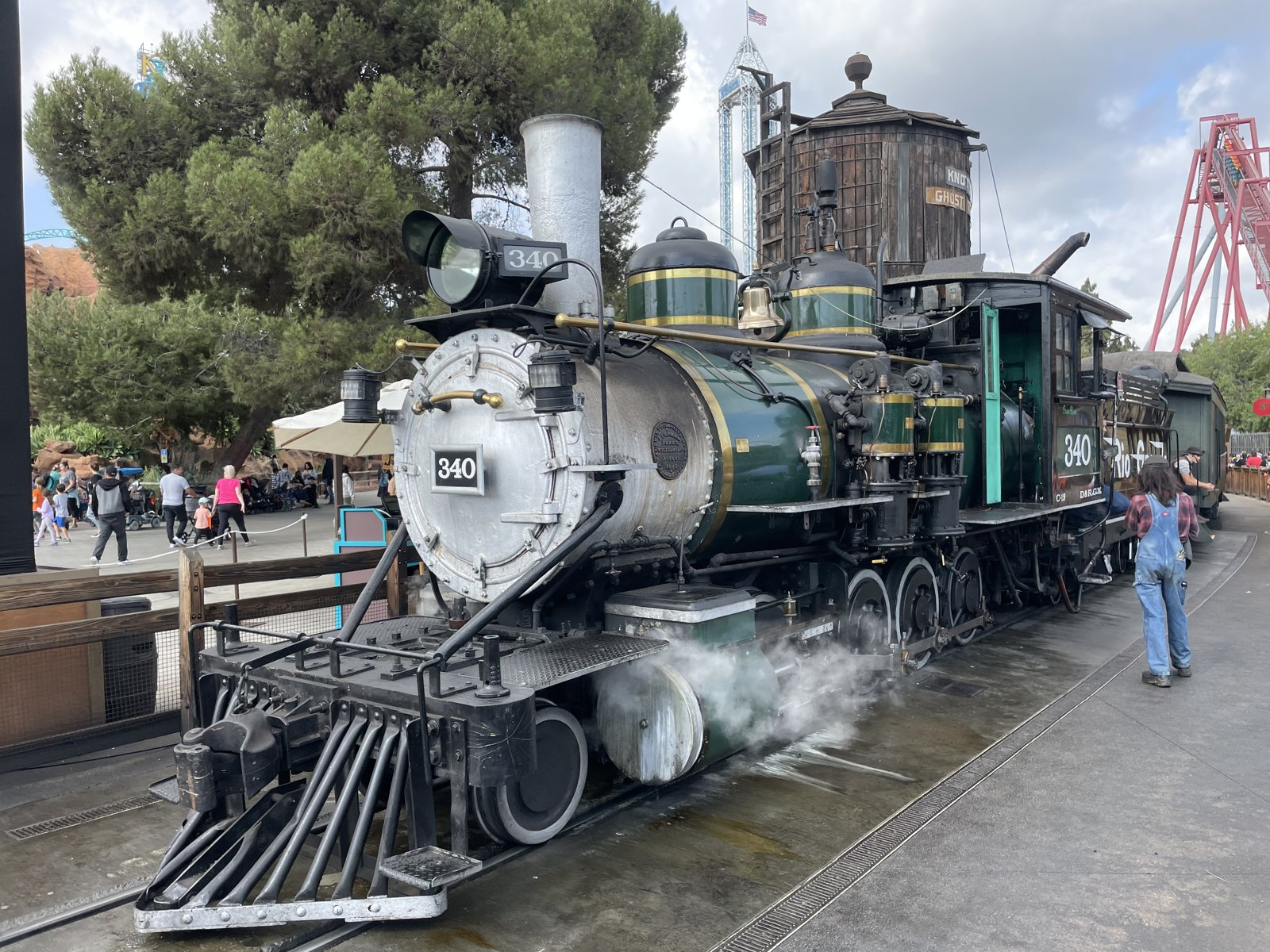
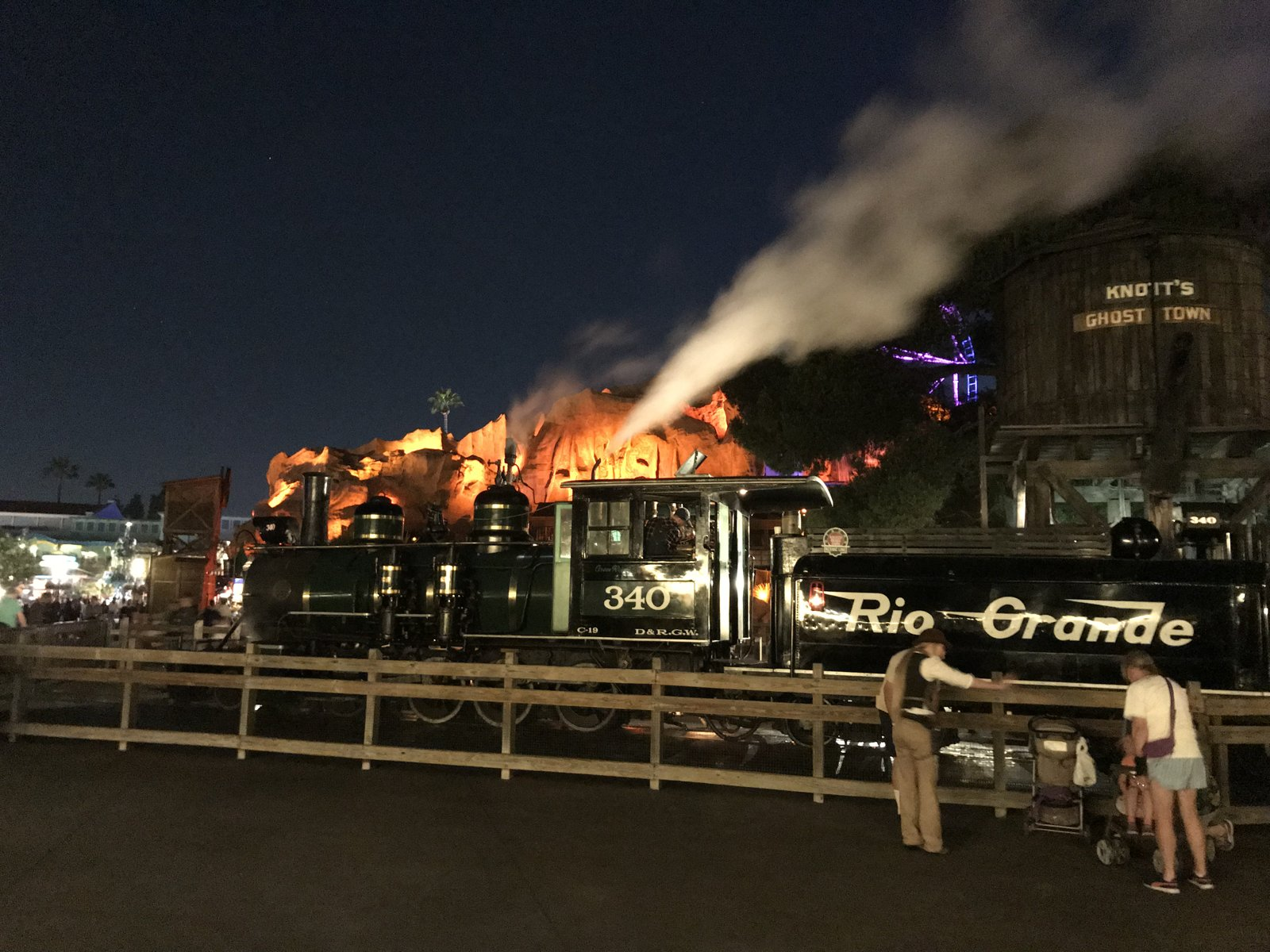
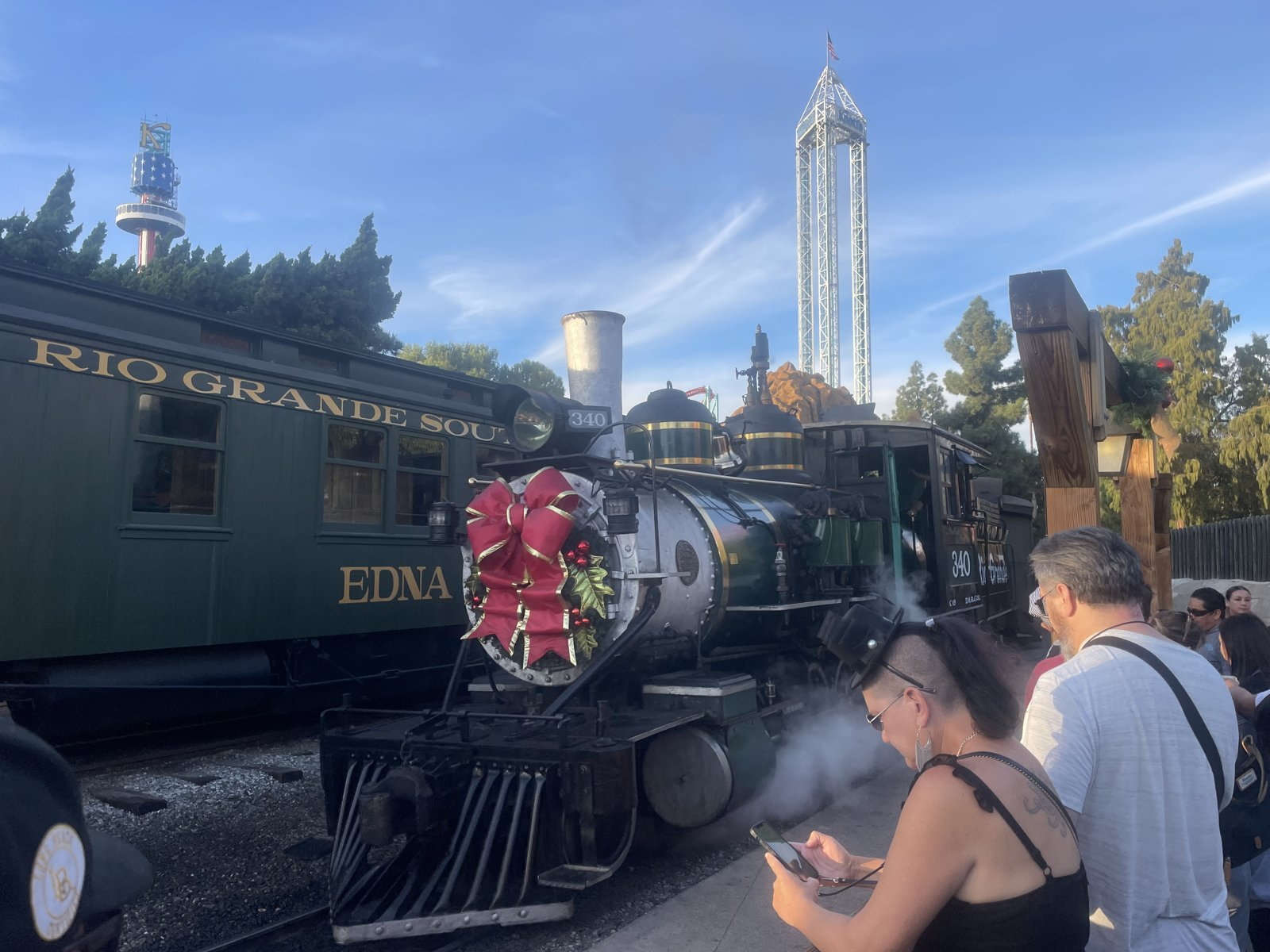
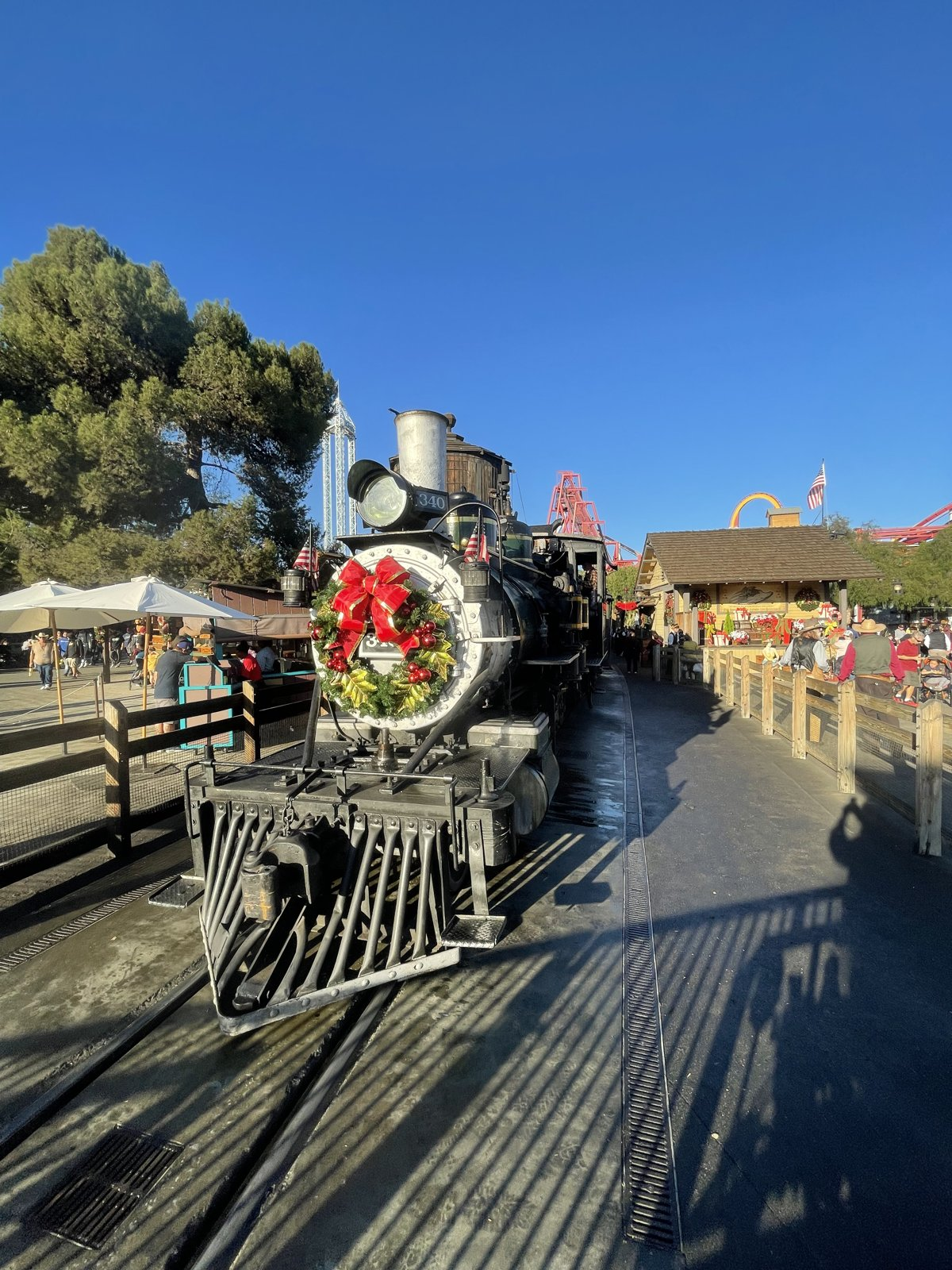
The railroad’s principal steam locomotives are No. 340, Green River, and No. 41, Red Cliff, both Baldwin-built 2-8-0 Consolidations dating to 1881. Together with vintage passenger cars, Rio Grande Southern caboose No. 0402, and Rio Grande Southern Motor No. 3, better known as a Galloping Goose, they form one of California’s most remarkable collections of operating narrow-gauge equipment.
What began as an attraction for Knott’s growing Ghost Town became something more historically important. By purchasing and operating authentic equipment as Colorado’s narrow-gauge railroads were being dismantled, Walter Knott helped preserve an entire cross-section of Western railroad history in Southern California.
Quick Facts
| Railroad | Ghost Town & Calico Railroad |
| Location | Knott’s Berry Farm, Buena Park, California |
| Gauge | 3-foot narrow gauge |
| Established | 1951–1952 |
| Formal Opening | January 12, 1952 |
| Founder | Walter Knott |
| Route | Five-eighths-mile loop |
| Steam Locomotives | No. 340 and No. 41 |
| Motor Car | Rio Grande Southern Motor No. 3 |
| Historic Caboose | Rio Grande Southern No. 0402 |
| Status | Operating heritage railroad and themed attraction |
Walter Knott’s Railroad
By the early 1950s, Walter Knott had transformed the area surrounding the Knott family’s restaurant into an expanding recreation destination centered on the developing Ghost Town.
Rather than use newly built amusement-park replicas, Knott acquired authentic narrow-gauge railroad equipment from Colorado. His purchases included two Baldwin steam locomotives, historic passenger equipment, a caboose, and railroad material associated with the Denver & Rio Grande Western Railroad and Rio Grande Southern Railroad.
The railroad formally opened with a golden-spike ceremony on January 12, 1952. Its trains gave Southern California visitors an opportunity to ride behind genuine nineteenth-century narrow-gauge steam locomotives only a short time after similar equipment had left regular service in Colorado.
Although created as an attraction, the railroad became an early example of operating railroad preservation.
A Colorado Railroad in Southern California
Nearly every major piece of the Ghost Town & Calico Railroad’s historic equipment connects California with the narrow-gauge railroads of Colorado.
The locomotives and rolling stock came from railroads built to navigate the grades, curves, and confined mountain geography of the American West. Their three-foot track gauge allowed railroads to reach communities and mining districts where constructing a standard-gauge route would have been more difficult or expensive.
At Knott’s, that equipment found a radically different environment. Instead of hauling freight and passengers through the Rocky Mountains, the locomotives began circling a compact loop in Buena Park.
Even so, their continued operation preserved far more than their outward appearance. Visitors could hear the exhaust, whistle, bell, air pumps, and mechanical sounds of authentic narrow-gauge steam locomotives while riding aboard historic Western railroad equipment.
Locomotive No. 340: Green River
No. 340 was built by the Baldwin Locomotive Works in 1881 as Denver & Rio Grande No. 400. It is a three-foot-gauge 2-8-0 Consolidation associated with the Rio Grande’s C-19 class.
The locomotive carried the name Green River and spent an extended period at Knott’s as Gold Nugget No. 40 before its Rio Grande identity was restored.
Walter Knott acquired the locomotive in the early 1950s, and it arrived in Buena Park in 1952. It was subsequently converted from coal to oil, making continued steam operation more practical in Southern California.
No. 340 completed a major overhaul and returned to operation in 2016. It later traveled to the Durango & Silverton Narrow Gauge Railroad in Colorado for another extensive rebuild in the Durango & Silverton shops. Before heading home, No. 340 ran special Cascade Canyon excursions on the Durango & Silverton on June 5–6, 2026, and a photographer’s special on June 7, 2026, then returned to Knott’s Berry Farm in Buena Park.
Locomotive No. 41: Red Cliff and Walter K.
No. 41 is another Baldwin-built 2-8-0 narrow-gauge Consolidation dating to 1881. Originally Denver & Rio Grande No. 409, Red Cliff, it later became Rio Grande Southern No. 41.
The locomotive came to Knott’s during the railroad’s creation and became one of its two principal steam engines. In 2012, Walter K. was placed on the cab in honor of Walter Knott.
No. 41 underwent an extensive multiyear restoration that included work by the Durango & Silverton Narrow Gauge Railroad in Colorado. It subsequently returned to active service at Knott’s.
No. 41 preserves physical connections to the original Denver & Rio Grande, the Rio Grande Southern, and Walter Knott’s preservation work.
Two Locomotives, Two Distinct Histories
Although Nos. 340 and 41 are closely related Baldwin 2-8-0 locomotives of the same general C-19 type, they should not be treated as interchangeable pieces of equipment.
No. 340 spent its historic railroad career with the Denver & Rio Grande and Denver & Rio Grande Western. No. 41 passed from the Denver & Rio Grande to the Rio Grande Southern before entering preservation.
Their histories at Knott’s also diverged through different names, appearances, maintenance cycles, and mechanical restorations. Each locomotive warrants its own WRA equipment page, supported by a shared C-19 class page and this broader railroad history.
Historic Passenger Equipment
The Ghost Town & Calico Railroad’s significance does not end with its locomotives.
Its collection includes historic wooden passenger cars, open-air excursion equipment, a business car, and Rio Grande Southern short caboose No. 0402. The combination gives visitors the experience of riding historic narrow-gauge equipment rather than merely viewing it behind a barrier.
Rio Grande Southern Motor No. 3
The railroad is also home to Rio Grande Southern Motor No. 3, one of the unusual self-propelled vehicles popularly known as Galloping Geese.
The Rio Grande Southern developed the Geese as a more economical alternative to conventional steam trains during periods of declining traffic. At Knott’s, Motor No. 3 complements the steam locomotives by representing the railroad’s attempts to survive through innovation and reduced operating costs.
The Trip Around Knott’s Berry Farm
The railroad operates over a five-eighths-mile loop around Knott’s Berry Farm, departing from the station in Calico Square.
The route carries passengers through multiple areas of the park before returning to Ghost Town. The railroad’s staged train robbery has also become one of the attraction’s defining traditions.
The spectacle is theatrical, but the train itself is real. That combination of entertainment and authentic railroad equipment is what makes the operation unusual.
Historic Equipment in Everyday Service
Many nineteenth-century locomotives survive as static museum exhibits. Nos. 340 and 41 instead spent decades hauling passengers in daily amusement-park service.
Both locomotives have been associated with Knott’s Berry Farm since 1952. Their California preservation careers have become historically important in their own right.
The locomotives have been repaired, rebuilt, converted to oil, adapted to their operating environment, and maintained as working machines. Those changes are part of their preservation history.
Restoration and Continuing Operation
Keeping nineteenth-century steam locomotives operational requires substantially more than cosmetic maintenance.
Nos. 340 and 41 have received extensive mechanical work, including major multiyear overhauls. Their continuing survival depends on skilled employees, replacement components, inspections, operating knowledge, and institutional investment.
The partnership with the Durango & Silverton Narrow Gauge Railroad created a fitting connection by returning the locomotives to Colorado for specialized work on surviving narrow-gauge infrastructure.
Why the Railroad Matters
The Ghost Town & Calico Railroad is important because Walter Knott preserved more than individual machines. He preserved a working railroad experience.
The collection includes two operational nineteenth-century narrow-gauge steam locomotives, historic wooden passenger equipment, an authentic Rio Grande Southern caboose, Rio Grande Southern Motor No. 3, a functioning three-foot-gauge railroad, and generations of operating and maintenance knowledge.
For many Southern Californians, the railroad was their first experience aboard a real steam train.
Preservation Through Entertainment
Traditional museums preserve artifacts by limiting use and controlling access. Knott’s followed a different model: the railroad survived because it remained useful.
Its locomotives hauled visitors, its passenger cars carried families, and its railroad supported the Ghost Town experience. Entertainment supplied a continuing reason to maintain machinery that might otherwise have become static or disappeared.
The Ghost Town & Calico Railroad demonstrates that preservation and entertainment do not have to be opposing ideas. Public enjoyment can become the mechanism that keeps history alive.
Related Railroads
- Denver & Rio Grande Western Railroad
- Rio Grande Southern Railroad
Related Locations
- Ghost Town
- Knott’s Berry Farm
Related Topics
- D&RGW C-19 Class
- Locomotive No. 340
- Locomotive No. 41
- Rio Grande Southern Motor No. 3
- Galloping Goose
- Narrow-Gauge Railroad
- Baldwin Locomotive Works
- Walter Knott
Gallery
Western Rail Archive Notes
The Ghost Town & Calico Railroad is easy to underestimate because it operates inside a theme park. That would be a mistake. Walter Knott acquired authentic Colorado narrow-gauge equipment while historic locomotives and cars were rapidly disappearing. By placing them into active service, he preserved not just their physical forms but the experience of riding behind nineteenth-century steam.
Archive Status
| Page Status | Category | Type | Gallery |
|---|---|---|---|
| Foundational Article | Railroad | Heritage Railroad | In Development |